

10 Day Lima and Cusco, Peru Itinerary
(with 4 Day Hike to Machu Picchu)
Peru is an extraordinary travel destination that promises unforgettable experiences. With this itinerary, you can explore the historic city of Cusco, visit charming towns in the Andes, hike the iconic Inca Trail, and spend a day marveling at the breathtaking Machu Picchu. Don't forget to discover the vibrant districts of Lima, where culinary delights await. With its rich history, stunning landscapes, and outdoor adventures, Peru truly offers a unique blend appeals to every traveler.

Disclosure: This post may have affiliate links. Please see our Terms for more information.
Day 1: Travel to Lima
Welcome to Lima, Peru, where vibrant culture meets stunning landscapes! Your journey begins at the Jorge Chávez International Airport, the gateway to this captivating city. Most international flights to Peru arrive at the new Jorge Chávez International Airport (LIM). Before I arrived, I purchased an eSIM from Airalo, a much more reasonable option than paying the daily international rate to my U.S.-based provided. In researching providers, I found that Airalo had the best coverage for my needs. Use referral code WENDY5054 for a discount on your plan if you choose to use them. Airalo walks you through installing the eSIM - all you need is an unlocked phone.
The Lima airport is located in a largely industrial area and not near the Lima City Center, Miraflores, or any other of the main Lima tourist locations. Due to its location and Lima's notoriously bad traffic, it is difficult to make use of a long layover because there is no such thing as quick trip into Lima, despite it only being a 8-12 mile ride. It can take anywhere from 45 mins to 2 hours to go one way. However, there are a couple of things to see relatively close to the airport. See my Day 2 itinerary if interested.
Because layovers can be tricky and flights can be delayed causing missed connections, it is recommended that you fly to Lima and spend the night near the airport and catch a flight the next day to Cusco. For a quick overnight, I opted for the Wyndham Costa Del Sol Lima Airport. The hotel offers a free shuttle to and from the airport that runs every half hour, 24 hours a day. The ride takes about 20-25 mins, although the hotel is only about 3 miles from the airport - again, the traffic is awful. The hotel includes a free breakfast and the rooms are clean and comfortable.
Please note that there are two Wyndham's at or near the Lima airport. The Wyndham we stayed at the first night is not located directly on the airport property, rather it was located at the old airport terminal. The Wyndham Grand Costa del Sol is located at the airport terminal and is more higher end than the Wyndham Costa del Sol. Don't ask me why Wyndham named the hotels so similar. In researching my trip, I read reviews of people thinking they were booking the hotel on the airport grounds only to be turned away and told they booked the one 20 mins away.
The travel day to Lima was long and I went with my go-to travel outfit from lululemon. I love lululemon's Adapted State Perforated High-Rise Joggers, which have secure zippered pockets to store your phone and cards and zippers at the cuff make them easy to get on/off and to give your legs a break on long flights. You can find them here. I paired them with lululemon's Hold Tight Long-Sleeve Shirt. I rarely travel without my oversized J.Crew Cashmere Wrap. It doubles as a blanket on long flights. Check out my Long Haul Travel Essentials for more recommendations.
Lastly, before heading to sleep on our first travel day, we began taking Diamox in hopes of avoiding altitude sickness when arriving in Cusco. Everyone should consult with their own medical professional if concerned about altitude issues as only a physician can tell you what is best for you but other than tingling in our hands, we had not side effects and did not develop altitude sickness the entire trip, including our summit to 14,000 ft during our Inca Trail hike.

Day 2: Travel to Cusco
We woke up and took advantage of the free hotel breakfast. I had a made-to-order omelet and a delicious cup of coffee. The servers were attentive and we found it to be a great hotel for our quick stopover in Lima.
As mentioned above, there are a couple of nearby things to do near the airport. We booked an afternoon flight on LATAM airlines, the major airline flying to Cusco, in order to visit the Real Felipe Fortress. Before heading to the fortress, we checked out of the hotel and took the free shuttle back to the airport to drop our bags and check them in for our flight. Despite our flight being about 6 hours later, LATAM allowed us to check them. Perhaps we were lucky but it worked out great and we avoided having to pay for luggage storage.
From the airport, we grabbed an Uber, which are everywhere and cheaper than taxis, and we headed off to the fortress, which is about 20 minutes away from the airport. The Real Felipe Fortress was built to defend the main port of the country, as well as the city of Lima from pirates during colonial times and was subject to a two-year siege that ended Spain's presence in both Peru and South America. It is currently the Peruvian Army Museum, displaying historical uniforms, weapons and other military paraphernalia. See pictures below for a taste of what the fortress had to offer.


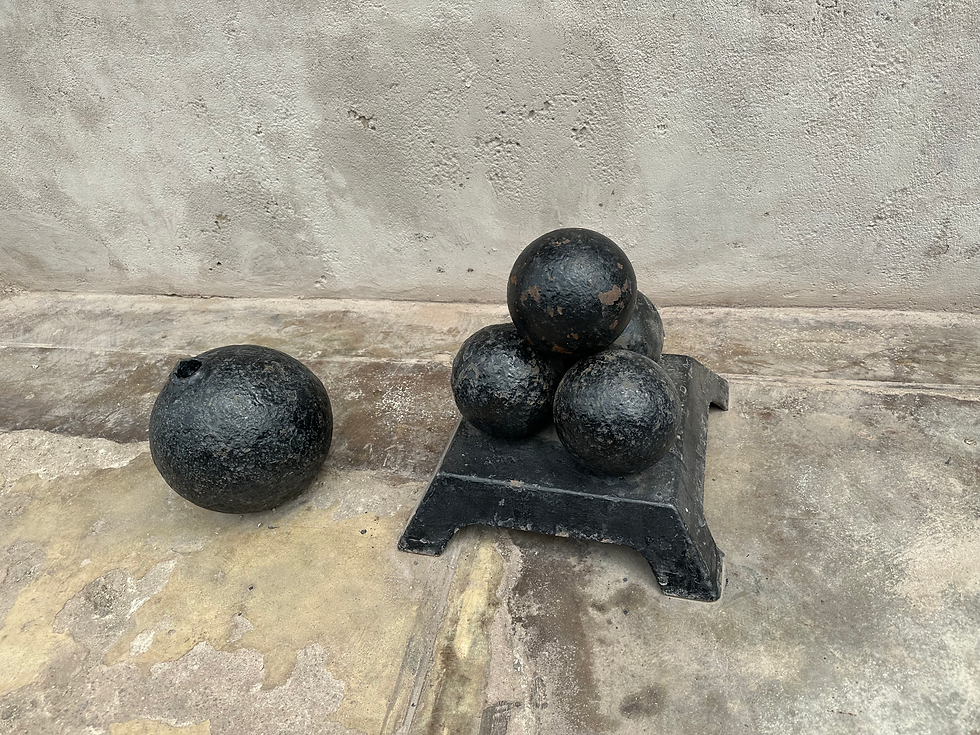


After our day the fortress, we grabbed an Uber back to the airport to check in for our flight to Cusco. A quick note about the airport - the domestic and international terminals are separate. You cannot access the lounge if you are flying domestically as it is only on the international side of the terminal.
This was my first time flying LATAM and I was very impressed. We opted for Premium Economy seats because we were travelling with several bags and the Premium Economy seats included a checked bag, a carry on, and a personal item. Premium Economy also included priority boarding, priority luggage handling, front of the aircraft seating, and an empty center seat between my husband and me. During the flight, we were offered a beverage and snacks, which helped to hold us over to dinner. The view coming into Cusco over the Andes was stunning.
Upon landing at the Cusco airport (CUZ), we gathered our bags (Premium Economy for the win as our bags were the first ones off) and we grabbed an Uber. Ubers are plentiful in Cusco.
Because I have Titanium status with Marriott, I opted for one of Marriott's Cusco hotels - the Palacio del Inka. It is part of Marriott's Luxury Collection and was definitely a splurge but well worth it, particularly after our Inca Trail hike. More on that on Day 8. The hotel staff is amazing and were welcoming from the moment we stepped through the door. After check-in, we were personally escorted to our room to ensure we were happy and settled. We were upgraded to a suite which included a separate lounge area. The room also included a personalized note welcoming us and tray of Peruvian treats.
After settling and unpacking, we went to dinner at the Parada Vegana Restaurant. It is a vegan restaurant and, although we are not strict vegans, we definitely enjoy delicious vegan food. Parada Vegana did not disappoint. It was a quick 10 minute walk from our hotel which gave us an opportunity to see a little bit of Cusco on our first night there. The food was fantastic. I opted for the vegan Pad Thai, which was delicious. The service was slow but I learned quickly that this is pretty standard in Peru and that I needed to adjust my U.S. standards and relax. We ended the night in our ridiculously comfy bed and settled in to acclimate at 11,000 ft.
Days 3-4: Cusco
We woke up feeling refreshed from a great night's sleep and decided to take advantage of the free breakfast offered by Palacio del Inka. The breakfast buffet offers a little something for everyone and caters to the global clientele - see slide show below. In addition to the buffet, an a al carte menu is included where customers can order eggs, omelets, and French toast.
 |  |  |
|---|---|---|
 |
Palacio del Inka's
Breakfast Buffet
After the delicious breakfast, we visited the hotel's central courtyard to see the vendors setting up and to visit with the hotel's most celebrated guest, Inti the Alpaca! Inti was a highlight for this animal lover.
After visiting with Inti, we decided to head out and explore Cusco. We began with a tour of the main square, the Plaza de Armas. The plaza is the historical, cultural, and political center of the city. Originally an Inca ceremonial site, it was rebuilt by the Spanish with colonial buildings like the cathedral on top of Inca foundations. Today, it is surrounded by colonial arcades, gardens, restaurants, and shops and serves as a center for celebrations, ceremonies, and tourism. We meandered through the shops and purchased a vest at The North Face for my husband for our Inca trail hike. We also shopped at local vendors for alpaca sweaters, scarves, and gloves.
It can feel a little overwhelming to figure out where to shop because there are so many local vendors but we took our time and found small shops that had a nice variety of items. While there are a lot of vendors on the street pushing tours and small trinket items, we found that the stores provided us with space to shop without feeling pressured to purchase items. We traveled in October and there also seemed to be a great deal of sales happening given that it was heading into the Peruvian summer.
After finishing some shopping and sightseeing on the plaza, we went back to the hotel to drop our purchases off and to find a place for lunch. We settled on El Jardin restaurant, another vegan restaurant. Again, we are not vegan but we were advised not to eat heavy as we acclimated and so we decided to stick largely to a vegan and vegetarian menu. The food was delicious and I would recommend going and enjoying the nice ambiance right in the heart of the Plaza de Armas.
After lunch we opted to walk to Sacsayhuamán, a citadel on the northern outskirts of the city which was the historic capital of the Inca Empire. It should be noted that my husband and I are in great athletic shape. We are both runners. I mention this because the walk to Sacsayhuamán is largely uphill steps and located at 12,142 ft (approximately 1,000 ft higher than the Plaza de Armas). It took us roughly 3 hours roundtrip to get there, explore the entire complex, and walk back to the hotel. If you are looking for a less strenuous approach, you can catch an Uber there or, better yet, you can opt for an organized half day tour through Salkantay Trekking. To visit Sacsayhuamán, we purchased the Cusco Tourist Ticket for approximately $35 USD per ticket. Our plan was to visit several of the other 16 sites included in the ticket.
The Sacsayhuamán complex, a UNESCO World Heritage site, was built by the Incas in the 15th century, particularly under Sapa Inca Pachacuti and his successors. The real sight to see is the dry stone walls constructed of huge stones that were built on the site, with workers carefully cutting the boulders to fit them together tightly. There really is a lot to see at the site and you also can catch one of the best views of Cusco from the site. Lastly, there is a herd of llamas living on the site so it is an opportunity to get some up close pictures of one of Peru's beloved creatures.


After visiting Sacsayhuamán, we hiked back down to Cusco. We decided to walk towards the San Pedro Market, which is about a 10 minute walk from the Plaza de Armas, but could not be more different. It is the city's main food market and there is plenty to see from colorful flowers (see picture), fruits, meats, chocolates, coca leaves, and handicrafts. Trout ceviche, deep-fried pork, lomo saltado, aji de gallina, chicken soup are just some of the most popular dishes that can be tasted at San Pedro Market and there are some unique dishes that are served like the frog soup and roasted guinea pig. San Pedro Market is where locals meet for food but be aware that service is basic, prices are very low, and, if you are planning a Machu Picchu hike, I would avoid trying the food to avoid any traveler's stomach issues (more to come on stomach issues on Day 4). We opted to avoid purchasing any meals at the market but did buy delicious dark chocolate and Peruvian coffee.
After the San Pedro Market, we returned to our hotel. After a bit of a recharge, we ventured out on foot for our dinner reservation at Green Point Vegan restaurant, a 10 minute walk from our hotel. If you haven't figured it out yet, Cusco is a very walkable city although the sidewalks can be very narrow at points and cars do not yield to pedestrians so be careful.
I highly recommend making reservations at Green Point Vegan. It is very popular, even with the meat-loving crowd because the vegan food is so good! While we ate on the early side, by the time we left, there was not an open table in the restaurant. The dinner was also a belated birthday celebration for my dear husband. We loved the vegan mushroom tacos and pizza. Would absolutely recommend - see pictures below!

 |  |  |  |
|---|
After dinner we walked back to our hotel, exhausted from a wonderful day exploring a new city and enjoying local foods.
The next morning, we woke up and opted for the fabulous Palacio del Inka breakfast buffet and a visit with Inti the Alpaca before heading out to do more exploration of Cusco. Given the start of our 4 day hike on Day 5, we planned an easy and restful day. After breakfast, we decided to visit Coricancha, which was included in our Cusco tourist ticket. Coricancha was once the most important temple of the Incas, which was later used as a base for the Church of Santo Domingo when the Spanish conquered the city. he Coricancha, known as the “Golden Temple,” was the most sacred sanctuary of the Inca Empire, dedicated to the worship of the Sun God, Inti (not to be confused with Inti the Alpaca). This awe-inspiring complex stood out for its architecture, which was centered around a courtyard and its chambers once lined with gold.
Though the Spanish conquest destroyed much of Coricancha's structure, replacing it with the Church of Santo Domingo, you can still admire its enduring polished stone walls and uncover legends of the golden treasures that once adorned its temples.


After Coricancha, we decided to visit the Museo de Sitio Coricancha. It is around the block from the entrance to Coricancha. The museum has five rooms, displaying a collection of archaeological artifacts found on the Coricancha property, including ceramics, metal objects, as well as skulls, bones, and mummies. You can also see models of what Coricancha may have looked like in its heyday. I did not get many pictures in the museum as this was when I realized that I was unwell and may have traveler's stomach. We walked back to the hotel, which was 2 minutes away and I decided to lay down. In researching the trip, I knew this could happen and brought medicine with me (Immodium), which I promptly began taking.
We had plans for an early dinner at LOCAL525 Restaurant that I unfortunately had to cancel. I'm still not over having to cancel. It had been highly recommended and so now it means I just have to go back. I rested all afternoon and the hotel sent up a tea kettle and toast for me to help settle my stomach.
In the evening, I had to rally in order to go to our pre-hike briefing with our guide, Jainor. I explained that I was ill and that I'd have to reassess in the morning. I did not eat anything since breakfast, including the hotel toast and was doing my best to "let it pass". I left feeling a little defeated that a stomach bug might impede my hike. We went back to the hote and I kept my fingers crossed I'd feel different in the morning. We also had to get out backpacks packed for the hike. If you are curious what to pack for the 4 day Inca Trail hike, click here to view my packing list.
Days 5-8: Inca Trail Hike
Inca Trail Day One
Miracles do happen! I woke for our 4:30 am wake-up call feeling a lot better, not 100 percent, but well enough that I knew I'd be okay on the hike. We checked out and left our luggage with the Palacio del Inka since we would be checking back in after our hike. Our outfitters, Xtreme Tourbulencia, picked us up right on time and I went back to sleep for the ride from Cusco to Ollantaytambo (about a 1.5 hour drive). We stopped for breakfast at Inka Misana Minimarket, just outside Ollantaytambo, and I was able to stomach a banana pancake (which was delicious) and a little coffee. The market is a good place to pick up water and snacks before the hike and it had clean, free restrooms.
After breakfast, we drove a little further up the road to the entrance of the Inca Trail and its Visitor's Center. It was really happening! As we were finally waking up after breakfast, we met our fellow hikers that rounded out our group of eight. We had individuals from Egypt, Germany, Taiwan, and Argentina in our group.


The dog lover in me noticed was how many dogs were wandering around and I am pretty sure my camera roll from the trip ended up with more pictures of dogs than of the scenery. Our guide, Jainor, told me that the dogs typically have homes but wander around and on the first day of the hike, we saw many of the dogs following an individual, a horse on the trail, or both.
To give you a glimpse of the four days of hiking and elevation gains and losses ahead of us, see the map provided by MachuPicchu Andean:

This graphic gives you an idea of the challenge of the hike. For our first day, we covered roughly 7 miles and a net elevation gain of 1,410 ft. Of all the days, it was the easiest (at least to me). Our first day had perfect weather, relatively clear skies, and a nice balance of incline and descent. Mid-morning, we stopped at small shop on the trail. Day one of the hike would be the only day that we encounter shops along the trail. Now is a good time to let you know that because I took so many pictures on the hike, I've organized them and you can find them on the Inca Trail Photos page.
The mid-morning break refreshed and recharged me and I was finally feeling back to normal. We hiked for about another 2-3 hours before stopping for lunch, but made brief breaks along the way as our guide pointed out various Peruvian flora and Incan archeological sites. This made the hike manageable, particular.ly as we had one hiker suffering from altitude sickness.
After lunch, we began hiking again for several hours before reaching our campsite for the evening at Ayapata. We had plenty of furry creatures visiting us as we settled into our site. To see photos from Day One, click here.
Inca Trail Day Two
You learn very quickly that rest is hard to come by on the hike and wake up calls are always early. When you have to cover a lot of terrain each day, there is not an opportunity to sleep in. Day two was no exception. We were up and on the trail by 6:30 am. Each morning, we were served a hot breakfast and coffee that was always delicious and helped wake us up. Breakfast was usually eggs or pancakes and fruit. The perfect start to the day.
We were warned that day two would be our toughest day. Not only was it going to cover 7.5 miles (12 km) but would include an elevation gain of roughly 3,700 ft (1,200 km). During this day, our guide decided that some of us could go ahead with the groups other guide, Johann. We would be required to stay somewhere between Jainor and Johann. This approach made sense because our hiker with altitude sickness had not improved and Jainor wanted the rest of us to move at a quicker pace.
We were able to all come together for lunch before tackling the harder part of the day, the summit. After lunch, those of us that were quicker were off. At roughly 3pm on day two, my husband and I reached the summit of Warmiwañusca (Dead Woman's Pass) with Johann and two others from the group. We stopped to get some amazing summit photos - see here - and intended to wait for the rest of the group but weather on the mountain changed quickly and it began thundering and lightening. Johann told us to begin the descent to the campsite for the night. As we began descending, it also started snowing and then sleeting. Again, I'll encourage you to check out my packing list because day two was a lesson in packing for any weather contingency.
The descent was challenging for several reasons. First, descending is hard on the knees and quads. Hikers should adjust your poles to make them about 10 inches longer on descent to absorb more of the weight. Second, the weather made the stairs going down slick and generally treacherous. Lastly, despite waterproof shoes, my feet got wet so I began to get cold. At any rate, we hiked roughly 2 straight hours to our evening campsite. I was almost as happy to get to the campsite as I was to summit Dead Woman's Pass. Our porters met us at our Pacaymayo campsite with hot coca tea and helped us get our wet gear hung up.
The day and its weather took its toll on a couple of the group who decided to skip dinner. We joined those that could make it and enjoyed hot cocoa, soup, and delicious chicken and vegetables. It was a welcome meal after a tough day on the mountain.
Inca Trail Day Three
We woke to a cold morning and while my hiking shoes were not entirely dry yet, they were dry enough. I wore a liner sock and my wool Darn Tough Vermont socks. After a warm breakfast and coffee, we were off again. While day three would not have crazy elevation gains, we would have to cover over 10 miles (16 km) and there would be ascents and descents. Compounding the difficulty was that most of us were pretty tired and sore from the challenging prior day. But the sun was out early and that was enough to recharge my inner battery.
About 45 minutes into our hike brought us to our first archaeological site, Runcuracay, a site that features unique semi-circular structures and stunning views of the Urubamba Valley, and was thought to serve both as a checkpoint and a spiritual retreat.
During the day’s hike, we also visited Sayacmarca and Phuyupatamarca Quechuan archeological sites. After breaking for yet another delicious lunch, we hiked and saw Intipata archeaological site before heading on to Wiñaywayna, where our tents were set up for our last night. Our entire group came together for our final celebratory dinner. We used the dinner to invite the cooks and porters to the tent to thank them for their amazing service. We provided them with a group cash (in soles) gift.
Inca Trail Day Four and Return to Cusco
Another very early morning wake-up call at 4:30 am. Unlike other days, we had to be up early for the porters to pack up the campsite and make their early morning train back to Ollantaytambo. We woke, packed up, were provided with a bagged breakfast, and went to a waiting shelter until it was okay to head toward the Wiñay Wayna checkpoint. The weather did not cooperate with us for our final day and had to walk in the rain for most of the hike from Wiñay Wayna to Machu Picchu. It did not stop us from enjoying the hike and finding beauty both in the rain and when there were slight breaks in the rain.
Again, I cannot stress enough that this was not atypical. Weather on the mountain can be unpredictable. When we finally reached the end of the Inca trail at the Sun Gate, we had breaks in the rain and could finally catch the coveted views of Machu Picchu. It was breathtaking and it is not difficult to understand why it is considered a Wonder of the World. We passed through Sun Gate and then hiked down to Machu Picchu. To see day four photos, click here.
Once we reached Machu Picchu, we completed Circuit 3 with Jainor. It took us about 3 hours to complete and it was simply amazing. Note - there is backpack and pole storage for 5 soles at the entrance to Machu Picchu. This allows you to enjoy Machu Picchu without carrying around the extra weight. I was happy to pay the fee.

Days 9-10: Lima
The dog lover in me noticed was how many dogs were wandering around and I am pretty sure my camera roll from the trip ended up with more pictures of dogs than of the scenery. Our guide, Jainor, told me that the dogs typically have homes but wander around and on the first day of the hike, we saw many of the dogs following an individual, a horse on the trail, or both.
To give you a glimpse of the four days of hiking and elevation gains and losses ahead of us, see the map provided by MachuPicchu Andean: